This is the first in a three-part series that explains the Nonprofit Alignment Pyramid. If you missed it, see our overview of what the model involves here.
The Nonprofit Alignment Pyramid is part of the Civicus Alignment and Risk Assessment model that we use with our clients. The model is built upon sound research, which we have conducted ourselves, and nonprofit industry best practices.
We assess the nonprofit in 10 different categories and use more than 100 touch points. This kind of thorough assessment gives you a very in-depth look at exactly what is happening at your nonprofit and how you can be a more effective leader. It shows you where and how you can improve, so your efforts will be both organized and strategic.
The 10 categories we research make up the Nonprofit Alignment Pyramid.
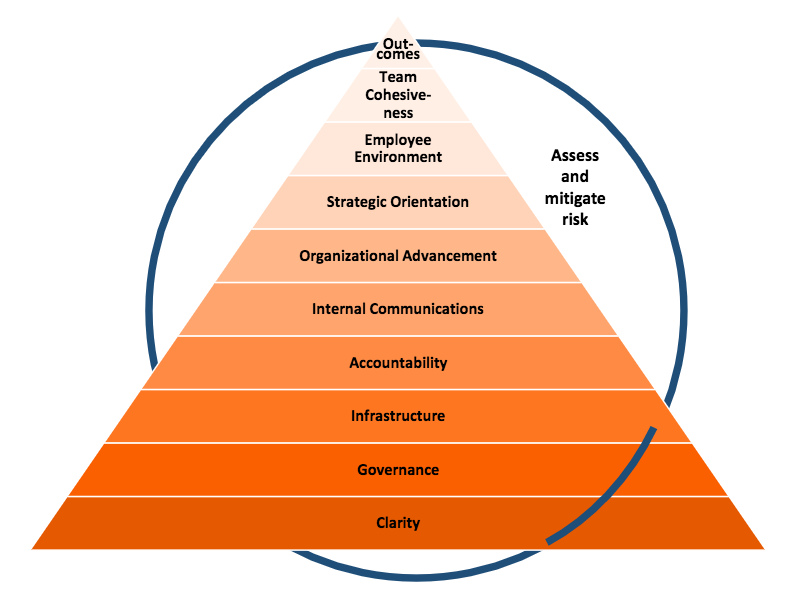
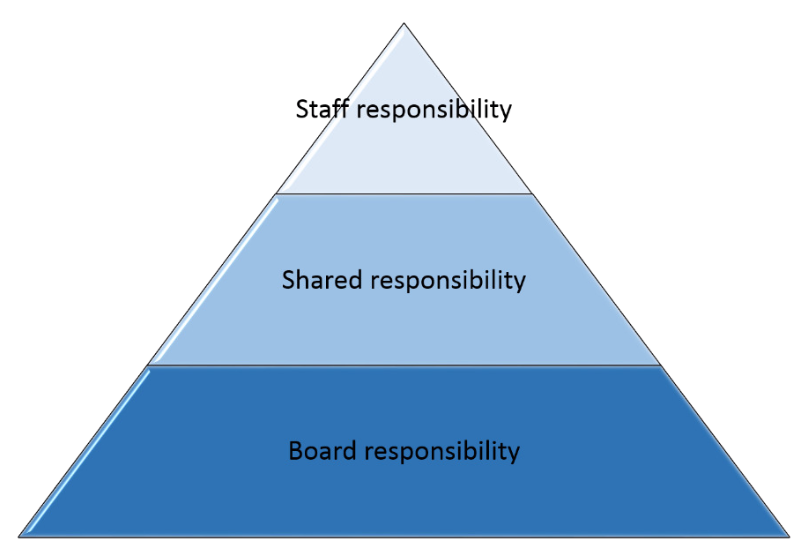
But, the pyramid can also be divided into three more general categories, designating who is responsible for what in the success of a nonprofit.
Board Responsibility
Without sound board work, the organization would collapse. A nonprofit’s board is essential to its success, and when it knows what its responsibilities are, it can be incredibly effective.
In our model, we have outlined what a successful nonprofit’s board should be responsible for.
At the base of the pyramid are those areas that fall under the responsibility of the board: clarity and governance. These are at the base of the pyramid because the board’s work is foundational to the rest of the organization.

When the board is working well, there is a pattern of success for the rest of the organization to follow.
Clarity
The first area the board is responsible for is clarity, which encompasses the following:
- Mission – A mission statement acts like the north star, constantly and consistently guiding the organization to where it aspires to go.
- Vision – The vision statement is a description of what the NPO hopes the world or community will one day become, due primarily to the NPO’s efforts.
- Values – Value statements help leaders make crucial decisions and keep adopted values in sight.
- Ethics – The code of ethics should mirror the organization’s values and be concise and clear statements of the minimum accepted level of accepted ethical behavior.
Together, mission, vision, values, and ethics assure the organization and its leadership have a clear and compelling purpose to their work.
Governance
The governance of an organization includes things like leadership, decision making, bylaws, legal and operational requirements, and other aspects that ensure a nonprofit runs efficiently.
You can learn more about the Nonprofit Alignment Pyramid in our free ebook: Nonprofit Organizational Alignment: An Overview.
For part two of this series, which includes information about board and staff shared responsibilities, watch for our blog post on DATE.